
Written By: Paul Cornell & Caroline Symcox
Directed By: Gary Russell
Featuring: Eighth Doctor & Charley
Release Date: March 2002
Seasons of Fear is available to listen to on Spotify or Audible. It can also be purchased from Big Finish, the link to which is below:
https://www.bigfinish.com/releases/v/doctor-who-seasons-of-fear-654
Big Finish Summary
On New Year’s Eve, 1930, the Doctor lets Charley keep her appointment at the Raffles Hotel in Singapore. But his unease at what he’s done to time by saving her life soon turns into fear. Sebastian Grayle: immortal, obsessed, ruthless, has come to the city to meet the Time Lord. To the Doctor, he’s a complete stranger, but to Grayle, the Doctor is an old enemy.
An enemy that, many years ago, he finally succeeded in killing. And this is his only chance to gloat.
The Doctor and Charley desperately search human history for the secret of Grayle’s power and immortality. Their quest takes in four different time periods, the Hellfire Club, the court of Edward the Confessor and the time vortex itself. And when the monsters arrive, the stakes are raised from the life of one Time Lord to the existence of all humanity.
*Warning: This review contains spoilers*
Introduction
The Doctor is in a cat-and-mouse game to prevent his own death at the hands of a soon-to-be immortal being. Seasons of Fear has an interesting concept, a framing device which creates anticipation for future titles, and some great character moments. However, bland settings and a below-par villain meant it never reached the potential from its first ten minutes.
Plot
Sebastian Grayle: “Only now do you begin to feel the bite of it. I have killed you, Doctor. Not only that, but I have delivered this world to my masters.”
Seasons of Fear evokes classic Doctor Who TV stories with its structure, including The Chase and The Daleks’ Master Plan. The Eighth Doctor (Paul McGann) finally manages to get Charley (India Fisher) to Singapore in 1930. But once there he is confronted by the mysterious Sebastian Grayle (Stephen Perring), who confirms two things. The first is that the Singapore witnessed is merely a mirage of an Earth devastated by Grayle’s ‘masters’. The second is that Grayle killed The Doctor in the Time Lord’s future. Grayle also confirms he has reached immortality, a reward for handing over the Earth to his ‘masters’. All of this takes place in the first five minutes; the story wastes no time at setting up its narrative. The Doctor and Charley travel through Grayle’s personal timeline to prevent the Earth’s destruction and The Doctor’s death. Their investigation takes them to the 4th, 11th and 19th century, the three opportunities Grayle has to action his plan. I really like the concept of going through someone’s timeline in a literal race against time. Knowing what the future holds also made this listener wonder how The Doctor will avoid his fate.
The story is fairly evenly split between the three different locations. Part 1 focuses on a Roman fort, after detours to a dusty attic and, bizarrely, three weeks in an abbey. This latter detail was a very strange choice. Yes, The Doctor and Charley knew basically nothing about Sebastian Grayle and thus needed to research him. But, the writers must surely have known how much of a pace breaker this off-screen adventure was. It completely contradicts the race against time the story was aiming for. There was also a few days between parts 2 and 3, to say goodbye to people? The Doctor and Charley don’t have time for this! That second part is based almost entirely in the court of King Edward the Confessor. I’d say that Parts 3 and 4 feel most like a traditional story, with linking parts and a consistent setting. These take place in and around a manor house in the early 19th century, including the nearby caves. Efforts are made to have different encounters in each setting. These include a ritual sacrifice, a poisoning, imprisonment, an awkward dinner party, and an absolutely random Dalek encounter.
But, even with these small differences, each Part feels very cut and paste. The Doctor and Charley will land somewhere, meet a few characters and thwart Grayle’s latest plan of the week. They then head off to the next moment Grayle can commit mass sacrifice for his ‘masters’ (after off-screen delays). The villain’s schemes feel increasingly harebrained, like how The Doctor’s arch-nemesis, The Master, became in his later years. The structure is therefore repetitive, not aided by the mediocre cliffhangers and disappointing resolutions. But, at the same time, there is an intensity in these subplots that drives the narrative forward. The culmination of the story is that it becomes a surprise sequel to a classic TV adventure. This choice will appeal a lot more to fans who have watched those older stories. Prior to this, I had not seen that TV story, and was initially blindsided when the twist is revealed. I decided to watch that story and yes, I was able to visualise the villains better. In retrospect, there are many hints dropped, some of which are clever, and others are way too obvious. Overall, this story is meandering and, whilst there is a great concept, I don’t think this lives up to it. The best plot points were those taking place outside of the story of Sebastian Grayle.
Character
Charley: “To what folly do you refer?”
Lucy Martin: “I, how many follies do you see around you?”
Charley: “I would hesitate to be known as a girl who found folly where there was none.”
The Doctor: “Oh, stop it”
As expected for an adventure which jumps between locations, the leads carry most of this story. Charley (India Fisher) is the standout, and is quickly cementing herself as one of my favourite Doctor Who audio characters. She has some of the story’s funniest moments. Her reaction to holding an alien sword. Her bloodthirsty comments on the ways they could kill Grayle (stoning, catapulting and dropping into a volcano, to name three). Her choice to speak like a Jane Austen novel when in 19th century England, much to The Doctor’s disapproval. Her nonchalant confession about her personal experience of an activity one does with a group of people. Charley’s energy matches the adventurous plot of jumping through time and space to stop one man. She prevents the story from ever becoming overly dour. But, Charley is not just comic relief; she challenges The Doctor. The scene where they discuss how the latter’s violent thoughts goes against the mantra of The Doctor is top tier.
The Doctor, meanwhile, is embroiled in a game of cat-and-mouse with Sebastian Grayle. The Doctor understands the severity of the situation, and the consequences of losing the battle. His dialogue and actions are more serious than Charley’s, but he still has that glimmer of mischievousness. He is gleeful when he moves one step ahead of Grayle, and at his most vulnerable when caught off guard. I liked the revelation involving King Edward’s wife Edith in a previous adventure. I’m really liking Paul McGann’s portrayal of the Eighth Doctor in these audio adventures as a whole. Whilst he has a fairly blank slate due to his lack of on-screen appearances, his character’s humanity is striking. This was The Doctor who notoriously stated he was “half-human, on my mother’s side” in the TV movie. But, Paul McGann’s depiction of this incarnation feels like a natural predecessor to the Doctors of the modern series. At the same time, I really like this Doctor’s grave seriousness. He sounds drained, almost resigned, when retelling this story to an unknown individual. This layered depiction meshes with the audio book medium perfectly, and I can’t wait to see him in future adventures.
The third main character is Sebastian Grayle himself. His concept is excellent: an individual craving immorality, who encounters The Doctor along his personal timeline. Again, this is not unique to contemporary viewers (River Song), but for the time it’s an intriguing premise. His actor, Stephen Perring, does well to make each iteration distinct in a logical way. When we first encounter him, he is naïve and out of his depth, not fully aware of his actions. With each iteration, he becomes more self-important and overconfident, which is a good character choice. Unfortunately, overall, I don’t think Grayle is a strong villain, and this comes down to the writing. Like The Master, he has moments of menace but is extremely incompetent. However, I don’t think the writing is strong enough to give Grayle the charisma of that iconic villain. He comes across more as petulant child rather than megalomaniac. But, the way the arc of his character concluded was fitting for this story. Overall, he is a mixed bag, which is also true of the side characters. For every Edith (Sue Wallace) or Lucy (Justine Mitchell), others are forgettable. Whilst the main pair have some great moments, the material isn’t consistently strong enough to allow others to shine.
Listening Experience
The Doctor (narrating): It was at the Singapore Hilton, on the cusp of the years 1930 and 1931, that I first met Mr Sebastian Grayle.
With this story’s multiple settings, I was looking forward to being transported to places with unique soundscapes. Sadly, these are fairly mixed overall. The story starts strongly, in a Singapore that is celebrating New Year’s Eve. The fireworks and bells convey that celebratory feeling, which provides a good clash to the dark plot revelations. I also personally think Singapore sounded very picturesque from the description provided: a sun setting over a boat-filled bay. From there however, the rest of the settings feel half baked. Take the Roman fort from part 1; there were many ways you could convey atmosphere. All I found out about it was that it was constantly raining. The court of Edward the Confessor isn’t quite as empty, but suffers in comparison to other banquets in the series. The 19th-century settings, including the manor, countryside and the caves, again feel half baked. As a listener, it feels like less emphasis was placed on atmosphere than in previous Eighth Doctor adventures. Both Invaders from Mars and The Chimes of Midnight utilised sound to create striking visuals. This just felt like a traditional Doctor Who TV episode, but in audio form.
There are some effective stylistic choices which boost the story, as few in number as they are. I liked the reference to Minuet in Hell, a past Eight and Charley adventure involving the Hellfire Club. There is a fun sword fight sequence that felt more adventurous and evoked the classic TV story The Sea Devils. I liked how empty and eerie the Time Vortex felt, as somewhere outside of time and space. But the most impactful moments come outside of the main story. Firstly, this adventure is narrated by the Eighth Doctor to an unknown person. It works really well to bookend the adventure, as you ponder the circumstances around this confession. The Eighth Doctor stories have a main arc in the Charley mystery. I wonder if future stories will have this narration. Secondly, I love that this story ends on a cliff hanger, one that is completely left field. Very little was confirmed in the moment, aside from it linking to the status of Charley Pollard. It feels like these will culminate in something earth shattering for The Doctor and his companion.
Final Thoughts
After the brilliant The Chimes of Midnight, this feels like something of a misstep. On paper, I really like the concept of The Doctor and Charley travelling along someone’s timeline to prevent catastrophe. It would have also been unique for the time in which it was released. But, a repetitive framing device, bland settings and an unevenly written villain stop this from truly coming together. I really like The Doctor and Charley in this story, and revelations in the closing minutes are very impactful. It is a decent listen, just doesn’t reach the potential that its concept promised.
Ratings
Plot: 3/5
Character: 3.5/5
Listening Experience: 3/5
Overall: 3/5
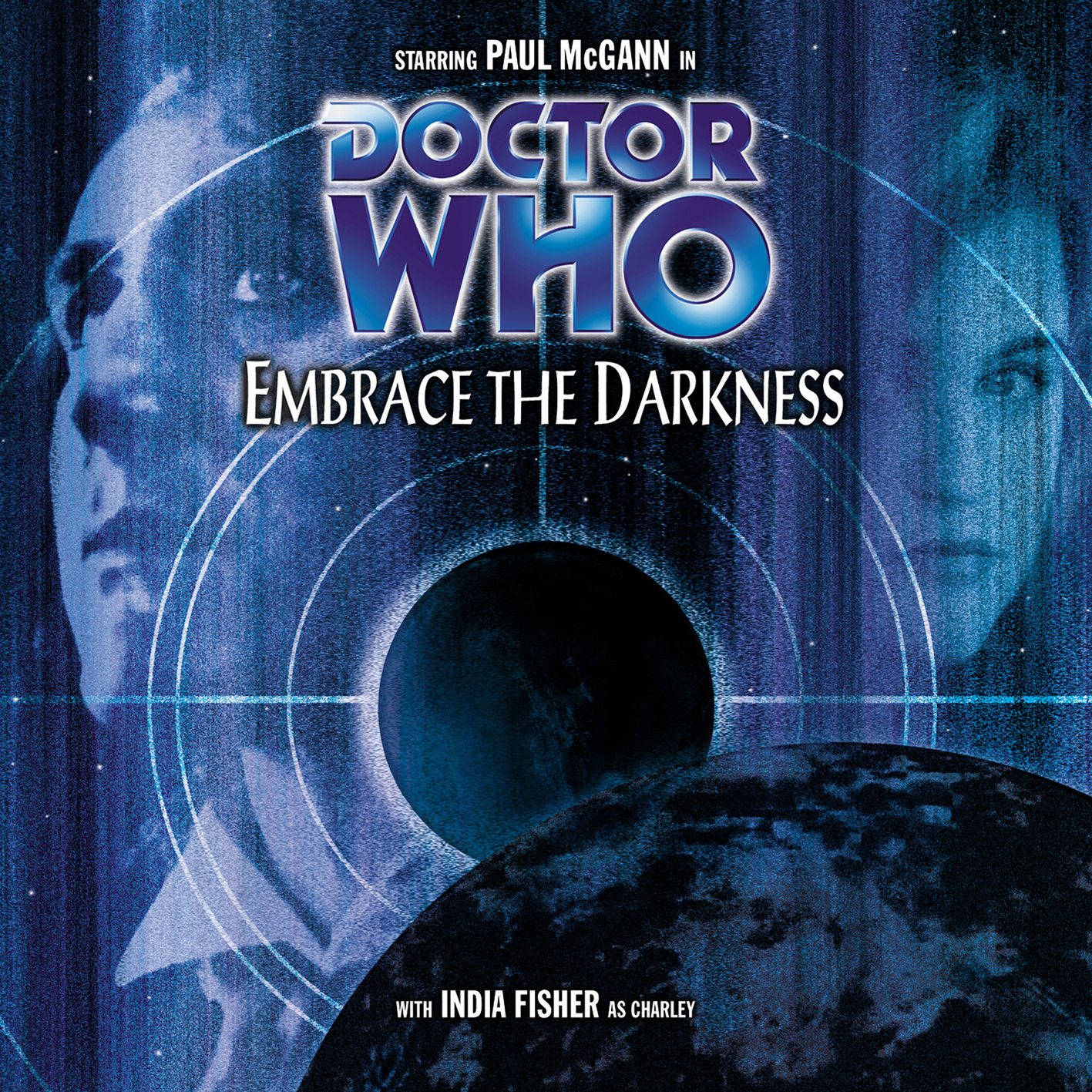
Next Review: Doctor Who: Embrace the Darkness
The Doctor and Charley travel to the remote Cimmerian System to unravel the mystery of its sun. But darkness has already embraced the scientific base on Cimmeria IV in more ways than one. In a fight for survival, the Doctor must use all his wits against a deadly artificial lifeform and an ancient race whose return to the Cimmerian System threatens suffering and death on an apocalyptic scale.
Thank you for reading my review of Doctor Who: Seasons of Fear.
If you enjoyed reading his review, please subscribe to the blog to be notified when new posts are published. I am aiming to get one Doctor Who audio book review out monthly, as well as my other recurring series.
Every Doctor Who review I have done, whether that be TV or audio book stories, can be found here.
Did you like the multiple settings, and did the multiple twists surprise you?
Please feel free to leave your thoughts on Seasons of Fear in the comments section below. Also, if you have any recommendations or feedback on this series, that would be appreciated.
Alternatively, please feel free to email editor@thebloggingdj.com, and I’ll see you next time for my review of Doctor Who: Embrace the Darkness.
 The Blogging DJ
2 comments