
When I was 8 years old, I watched my first ever Doctor Who story. It a VHS copy of the Jon Pertwee adventure ‘The Sea Devils’. We bought at a flea market on holiday in Devon. I loved that story and watched several more classic adventures over the next few years. Even before the show was revived in 2005, I was a Doctor Who fan. Even now, I have an appreciation of the classic era of the show. It managed to awe and terrify fans in equal measure, before this era of CGI and flashy visuals. Aliens and historic societies were brought to life through practical effects and common household items.
For the show’s 60th anniversary, the BBC released the vast majority of classic era stories on its iPlayer. Over the past couple of months, I have watched every story from the first ever season of the show. Broadcast between 1963 and 1964, this season starred William ‘Bill’ Hartnell as the first iteration of The Doctor. Joining him were William Russell as Ian Chesterton, Jacqueline Hill as Barbara Wright, and Carole Ann Ford as Susan Foreman.
Doctor Who is a science-fiction TV show targeting the family market. In the early 1960s a committee proposed a new show to fill the BBC’s Saturday teatime slot. This committee included the BBC’s head of drama Sydney Newman and the show’s future script editor David Whitaker. After the show was approved, Newman approached Verity Lambert to produce the show’s first season. This season would eventually be comprised of eight TV stories, with a total of 42 weekly episodes.
When teachers Ian Chesterton and Barbara Wright become concerned with the strange behaviour of one of their pupils, they decide to investigate. They discover this pupil’s address is a junkyard and meet her grandfather, a man who is simply called The Doctor. After bursting through the doors of a police telephone box that isn’t what it seems, Ian and Barbara demand answers. The Doctor whisks his granddaughter, Ian and Barbara away for several adventures through time and space.
Below is my ranking of every Season 1 story, from least favourite to favourite.
8. The Keys of Marinus

In a season of great stories, ‘The Keys of Marinus’ falls short. Generally, this season’s first half is much stronger, as though this was purposeful on the part of the show runners. This makes the drop in quality for the first story of its second half feel even more noticeable.
On paper, this story is an opportunity for Doctor Who to showcase many settings in one go. The story’s premise is that our heroes are sent to collect a bunch of McGuffins to prevent an invasion. Travelling across the planet of Marinus, they traverse overgrown jungles, snowy mountain passes and secretive cities. The setting changing every episode was the story’s most exciting aspect, as I wondered where they would end up next. This could have been a fun adventure with zany side characters and interesting scenarios.
Unfortunately, the end result feels haphazard and varies wildly in tone. ‘The Keys of Marinus’ was written by Terry Nation, the man credited with bringing the iconic Daleks to the screen. This was the last non-Dalek story Nation wrote until 1975. He tried to create another recurring villain with the Voords, but these just resembled men in wet suits. The 1960s viewers probably forgot about their invasion, as this was only at the fore in parts 1 and 6. Additionally, I found the Voords and their plans to both uninteresting and non-threatening. Nation maybe should have framed this story around a couple of the side adventures.
The standout episode was part 2, the Barbara-centric ‘The Velvet Web’. Arriving in the hypnotised city of Morphoton, the travellers slowly fall to that same mind control. Barbara is the only one immune to this and work to destroy whatever is influencing her friends. There is some effective imagery used here, especially when it contrasts what Barbara sees with what the others see. Part 5, ‘Sentence of Death’, sees Ian arrested for murder and the Doctor is essentially his lawyer. It is very silly but feels like some thought was put into it. I would have been happy if ‘The Keys of Marinus’ were a combination of these two ideas. Get rid of ‘The Snows of Terror’ and ‘The Screaming Jungle’, which have cliched plots and annoying character moments.
‘The Keys of Marinus’ has its moments of quality. However, its wrap-around narrative is weak, and a couple of the episodes are poorly conceived. This will not be one to stay long in the memory.
Star Rating: 5/10
7. The Sensorites
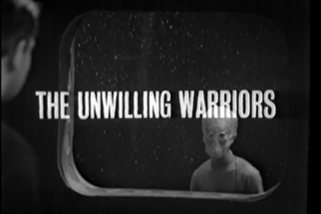
When watching this season, I found myself less invested in the alien world stories (with one obvious exception). ‘The Sensorites’ falls into the same category as ‘The Keys of Marinus’ on this front. Whereas the latter was a hodge-podge of different ideas, ‘The Sensorites’ was competent but dull. This was the story where I felt writer fatigue creeping in.
The premise of this adventure is that the travellers land on a spaceship with a dead crew. After resuscitating them, the crew reveal that they are being held captive in orbit by the Sensorites. Our heroes go down to the Sense Sphere to broker an agreement, and get caught up in a political plot. This is where the story feels half-baked for me. Viewers are fully aware of the plot and which Sensorites are involved, but the Doctor discovers it much later on. The story treads on eggshells for too long to maintain this status quo. There is also a poisoning plot which is more of a mystery and was therefore more interesting for me. However, I don’t think the plot gets out of second gear for a long time, even with Ian being poisoned. This is one story which should have been trimmed in length. 6 parts feels too long for the story being told; this would have easily fitted into 4.
I am surprised by how much of ‘The Sensorites’ feels recycled from other Season 1 stories. For every interesting element, another feels copied and pasted. Susan’s psychic abilities is an example of something this story introduces that feels fresh. It takes her away from the ‘damsel in distress’ role seen previously and makes her more active. It also creates the first real cracks in her relationship with her grandfather. On the other hand, a story with an alien and a humanoid faction fighting for power has already been seen. This story does invert the plot of ‘The Daleks’ slightly, but still feels like a weaker version of that.
There are a couple of interesting character moments and a solid cliff hanger at the end of Part 1. But, overall, ‘The Sensorites’ is a fairly dull watch and doesn’t do enough to justify its length.
Star Rating: 5.5/10
6. The Reign of Terror

The historical stories this season made more of an impact than the futuristic ones. Whilst ‘The Reign of Terror’ is the weakest of the three purely historical stories, it is still good. The premise of this story is that the time and space travellers arrive in France, 1794. At the height of the French Revolution, and The Doctor and his companions must avoid falling victim to the guillotine.
The best part of this story is the opening episode, a well-paced segment with fight sequences and actual stakes. The cliff hanger is one of the season’s best, as Ian, Barbara and Susan are arrested for being royalist sympathizers while The Doctor is unconscious in a burning house. This was the final story of Season 1, and consequently it felt very dangerous for the characters. Susan in particular is dealt a rough hand by falling ill during this story. There are also a couple of fun but timely cameos from figureheads in that period.
But, once we get to Paris, the plot’s drive starts to falter. Much of the story is centred on the jail where the characters are kept before execution. There are aspects which feel successful, like Ian discovering an undercover spy plot from the British. The Doctor is also on top form in scenes as he gleefully manipulates the dim-witted jailor. But, after a while, characters escaping from prison and then being threatened with imprisonment gets tiresome. Much like ‘The Sensorites’, I don’t think there was enough material to warrant a 6 episode length. I also don’t think the script actively engages with the concept of travelling to the past like the other historicals.
Incidentally, this is the first story on this list which has missing episodes. In the 1960s, the BBC did not have space for older episodes of their shows, so they junked the recordings. Many stories set in the 1960s were lost to time. Some of them have been rediscovered in their original form in full. Some, like ‘The Reign of Terror’ have reconstructed missing episodes. Others do not exist at all in visual form and only have the audio. The missing episodes have been animated, and I think it has been done to a high standard here.
‘The Reign of Terror’ has some excellent moments and manages to maintain the threat against the characters. On the other hand, it drags in the middle section and some scenes feel like duplicates. It is a decent story, but I wish that it engaged with the historical backdrop more.
Star Rating: 6/10
5. Marco Polo

Though only one place higher, I consider ‘Marco Polo’ to be much better than ‘The Reign of Terror’. Whilst the latter doesn’t justify its length at times, this feels like a constantly evolving plot. It has a similar structure to ‘The Keys of Marinus’, as each part takes place in a new location. The premise of this story is that The Doctor’s time machine (TARDIS) breaks in the snowy Mongolian mountains. They then join a travelling caravan led by Marco Polo, who is heading to meet Kublai Khan in Cathay (China).
The caravan passes through an array of locations en route. Each of these feels vibrant and has their own character. It is also refreshing that a 1964 story tries to have a diverse cast to match the setting. The constant moving also allows writer John Lucarotti to include some effective scenarios. The scene where several characters are exposed to a sandstorm in the desert is particularly impactful. The supporting cast also get developed from the time we spend travelling with them. Maybe the best thing the story does is giving Susan something to do. Up to now, she has been a shrieking and aloof damsel in distress. Here, she is paired with Ping-Cho, a girl of similar age, who is being transported for an arranged marriage. They have a nice friendship, and I like that the writer includes moments where they compare world views. Finally, I like that Marco Polo’s actor Mark Eden narrates this story as if from his character’s journal. It definitely fleshes out this world further and makes viewers feel like they are watching history.
The biggest criticism I maybe have for this story is that it is slightly too long for its premise. This is the longest Season 1 story, at 7 episodes. Whilst the new locations keeps the story visually fresh, it does take a long time to get to Peking. The villain spends much of the story on different schemes to get rid of the time travellers. He is a fun, moustache-twirling villain, but even his schemes get tiresome after a while. When we get to Peking, there are fun scenes between The Doctor and Kublai Khan. But, after a long journey, I’m not sure the story’s conclusion justifies the trials the characters faced.
‘Marco Polo’ is one of the early Doctor Who stories of which no recordings of the episodes were ever found. I ‘watched’ this story through a high quality reconstruction made by the channel Loose Cannon. They combine tele-snaps (photos taken during recording) with the story’s surviving audio. This helped me to experience this story in its full, and will definitely use them for future lost stories.
‘Marco Polo’ is an epic journey, much like the travels of the titular individual. Whilst on the long side, it is a vibrant historical adventure and a testiment to the wardrobe and set design.
Star Rating: 7/10
4. An Unearthly Child

The first ever Doctor Who story was the hardest to rank. This kick-started a franchise that continues to this day and has been enjoyed by millions. The first episode, also called ‘An Unearthly Child’, really is that good. But, on the other hand, the rest of the episode is the weakest adventure of the season. So, this has been ranked on the sum of its parts as pretty decent.
If I was solely reviewing that first 25 minutes, it would be number one on this list. Positioning Barbara and Ian as the audience surrogates was a stroke of genius from writer Anthony Coburn. They are both very relatable in this opening part despite having differing opinions, and Hill and Russell act it well. I also liked the slow-burn mystery around Susan Foreman and her strange knowledge. Their investigation leads them to I M Foreman’s junkyard, and meeting Susan’s grandfather, The Doctor. That first reveal of the inside of the TARDIS is an iconic moment in the show’s history.
For such a perfect opening, the rest of the story is baffling. The cavemen could have been a great introduction to the show’s time travelling, as they feel both alien and human. I think much of the problem lies with the script. Hearing the words “Za make fire” over and over again made me feel as brain-dead as a neanderthal. As that line suggests, the rest of this story is just about cavemen trying to make fire. There is a rumour that states that something akin to Season 2’s ‘Planet of Giants’ would originally start the show. This would have worked even less as an introduction for the show, so am happy they stuck with this. The characters are also written very badly here, especially in contrast to that first part. The Doctor nearly tries to murder a caveman with a rock. Barbara is falling all over the place. Susan spends most of the adventure screaming.
‘An Unearthly Child’ is definitely a story of two halves. The opening part is the best of the season, and the rest is not a good representation of the show. Therefore, I think a position in the middle of the ranking is very fair.
Star Rating: 7/10
3. The Edge of Destruction

I was very surprised that I liked ‘The Edge of Destruction’ as much as I did. This is a story set almost entirely on board the TARDIS during a mid-flight. The show was 2 episodes short of their initial quota, and they had to write something in at short notice. Whilst on paper this sounds like filler, it is actually a great character study and crucial for the season.
This is the only Doctor Who story to solely feature The Doctor and his companions. The mid-flight failure is deemed by The Doctor to be sabotage, and he points the finger at Ian and Barbara. This explodes into a claustrophobic and suspicious atmosphere where accusations are being flung from all sides. The viewers are uncomfortably forced to choose between the audience surrogates Ian and Barbara, and the main character and his granddaughter. Under pressure, this situation brings out the worst in each of the quartet, and it is very believable. The only character who feels slightly off is Susan. Carole Ann Ford puts in a great performance that makes her character seem more alien than ever. However, the scene where Susan threatens Barbara with scissors feels tonally off. When the true culprit for the failures are revealed, and the characters reconcile, it feels permanent. This story creates a natural progression of the group from the squabbling in ‘An Unearthly Child’ to being friends.
The production crew lean into this being a character study by making this story a two act play. This includes filming from interesting angles whilst in the console room and using effects which add to the paranoia. Towards the end of the final part, the Doctor realises what has happened. William Hartnell expertly delivers this as a Shakespearean monologue, the lighting resembling a spotlight. The emphasis is on how the characters react to the situation, for example when Barbara sees a broken clock. This theatrical influence even reaches the plot. Part 1 sees The Doctor and his companions descend, until they are at their worst at the cliffhanger. Part 2 sees them climb out of this hole as they work together to prevent their destruction.
This may only be a two-parter set within the TARDIS, but ‘The Edge of Destruction’ is a well made and a well-acted story that is crucial to developing the dynamics of the lead characters.
Star Rating: 8/10
2. The Daleks
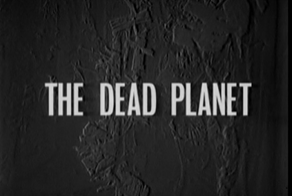
For only the second ever story of Doctor Who, ‘The Daleks’ is pretty miraculous. Not solely satisfied by bringing The Doctor’s greatest recurring adversary to screens, it also creates the basis of the show. As an added bonus, it’s also an excellent story.
My favourite thing about ‘The Daleks’, if I had to pick one, is that it constantly drives forwards. Arriving on a petrified alien jungle, The Doctor dupes his companions into visiting a metal alien city. Held captive by the city’s inhabitants, the Daleks, the group soon start suffering radiation poisoning. When they escape and meet the other inhabitants of the planet, they plan to stop the Daleks launching a bomb. This story has 7 parts, the same as ‘Marco Polo’, but I never feel like the story is lagging. It is always developing its plot, such as the reveal of the Thals or the plan to infiltrate the city. It also has some mysteries that are not revealed until later, such as what the Daleks or Thals look like. That part 1 cliffhanger of a Dalek’s plunger menacingly approaching a screaming Barbara is brilliant and doesn’t show much.
The Daleks may look like pepper pots with a claw and a plunger, but they are brutally cold and calculating. In contrast to the weak motivations of the cavemen in ‘An Unearthly Child’, the Daleks want to commit genocide. Tonally and thematically, this is the darkest and most mature story of the season. It also does not talk down to younger viewers, something which I think adds to the story’s more downbeat tone. At the same time, it is something of an adventure story. In the second half of the story, Ian, Barbara and some Thals are aiming to reach the Dalek’s city. To get there, they have to traverse a mutation-filled swamp, climb a cliff and swing over a gorge. These acts surely would have been replicated by children in the weeks following. It is an ambitious story with what it tries to do, and I think it executes it brilliantly.
I have predominately watched post-2005 Doctor Who episodes. Despite this, I found ‘The Daleks’ to be a thrilling and tense story that I will watch again and again. It is unfathomable that this story is more than 60 years ago. Alas, it falls just short of my number 1 spot.
Star Rating: 9/10
1. The Aztecs
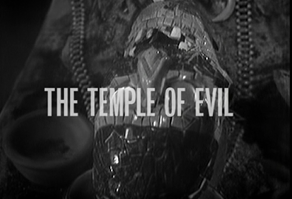
For all of the praise that I gave ‘The Daleks’, my favourite story this season was ‘The Aztecs’. It has great set design, a worthy antagonist and a frank discussion of time travel. However, what makes this number one for me is that it is Barbara Wright’s story.
From the very first episode of ‘An Unearthy Child’, Barbara was the character I most related to. This sensitive history teacher was the perfect audience surrogate to see the show’s universe through. She wasn’t an action hero like Ian, or an inhuman outsider like The Doctor or Susan. She was the heart that held this TARDIS team together; she was very human. That her story centres around Barbara attempting to make the Aztecs a better civilisation by outlawing sacrifice is perfect. The success of this story hinges on Jacqueline Hill’s performance, and she knocks it out of the park. ‘The Aztecs’ is Barbara’s magnum opus, seeing her journey throughout this story. She is stubborn in the face of The Doctor’s warnings that time can not be changed at the start. Masquerading as an Aztec god, she tries to change a civilisation, and over time realises that she will not succeed. The ending has a beautifully quiet scene between The Doctor and Barbara, in which Hartnell and Hill are both excellent. The Doctor encourages her that, whilst she did not save a society, she did save one man.
Away from the main narrative, there are other subplots of interest. Ian has an ongoing conflict with an Aztec warrior for command of the army, and there are a couple of well choreographed sword fighting scenes. The Doctor has a romantic interest for the first time, and their scenes together are rather sweet. Finally, the villain of the story, the High Priest Tlotoxl, feels genuinely menacing and a threat to Barbara. I think special mention should go to the set designers and the costumers for bringing the Aztec world to life.
‘The Aztecs’ is a great amalgamation of all of Season 1’s elements. It has a great attention to detail when bringing to life this historic setting. It has some great philosophical dialogue about the perils and realities of time travel. Most important of all, it has a lot of heart. For that reason, ‘The Aztecs’ is my favourite episode of Season 1 of Doctor Who.
Star Rating: 9/10
What is your favourite story of Season 1? Do you agree or disagree with any of my rankings?
Please let me know your thoughts in the comments section below, and please like and share this post. If you would like to be notified by email when new posts are published, please subscribe to my blog.
 The Blogging DJ
One comment